Vivian Maier American, 1926-2009

Vivian Maier photographed the streets of Chicago and New York relentlessly, yet her talent remained unknown throughout her lifetime. A professional nanny, she devoted every spare moment to wandering the streets with her Rolleiflex around her neck, casting a keen eye on the human experience of urban life and producing striking self-portraits. She never showed her photographs to anyone. Her posthumous discovery, a true American story, revealed one of the most remarkable talents in street photography.
In 2007, John Maloof discovered a lot at a Chicago auction house containing thousands of negatives, along with undeveloped film rolls and a number of prints. His subsequent research revealed that this was only part of a much larger body of work, which he gradually assembled by acquiring numerous boxes of negatives, film rolls, and documents. His online searches initially proved fruitless, until 2009, when an obituary published in the Chicago Tribune announced that Vivian Maier had died just days earlier, at the age of 83.
Vivian Maier was born in the Bronx in 1926 to an Austro-Hungarian father and a French mother. She spent her childhood with her mother, between France and the United States. It appears that her mother’s friend, Jeanne Bertrand, a portrait photographer, introduced her to photography. Maier took her first photographs in France around 1949, using a Kodak Brownie, a simple camera designed for amateur photographers.
She returned to the United States in 1951 and began working as a nanny for a family in Southampton, on the outskirts of New York City. In 1952, she purchased a Rolleiflex, a medium-format camera widely used by photographers at the time. Photography gradually became an increasingly important part of her life.
After moving from New York to Chicago in 1956, she began working for the Gensburg family. She cared for their three children and used their bathroom as a darkroom to develop her film. This marked the beginning of the most prolific period of her photographic career.
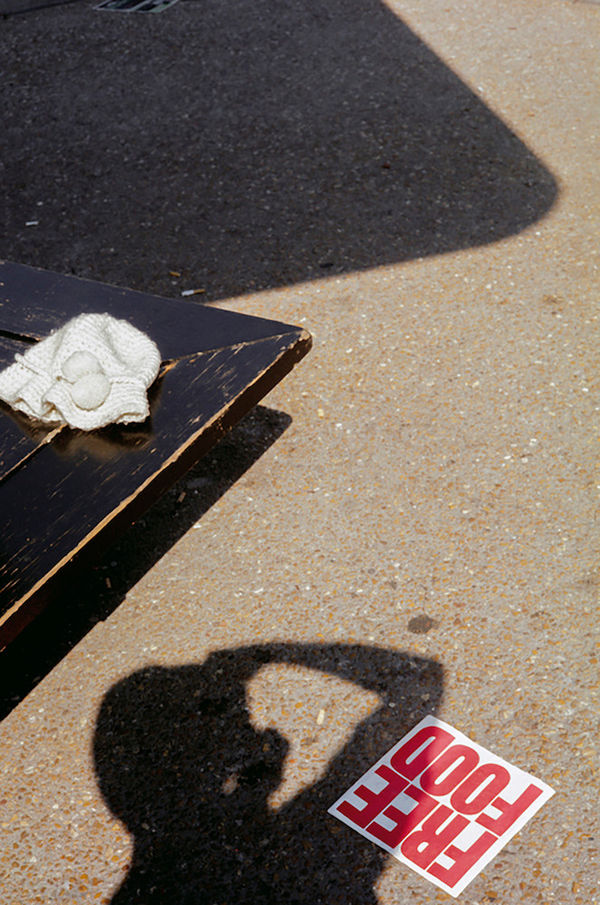
When she left the Gensburg family seventeen years later, Maier could no longer develop her own film. Moving from one household to another, she accumulated an ever-growing number of undeveloped rolls and unprinted photographs. She continued photographing until the late 1990s, also experimenting with colour. As her financial difficulties intensified, these rolls, too, remained undeveloped. She stored her negatives, film rolls, and documents in a storage unit.
In the early 2000s, the Gensburg children took her under their care and provided her with a small studio apartment. Her belongings were forgotten until 2007, when they were put up for auction due to unpaid storage fees, without her knowledge. Vivian Maier died in 2009 from complications following a fall.
John Maloof catalogued part of her work, meticulously reconstructing an extensive body of approximately 143,000 negatives, alongside films and audio recordings. Her photographs have since been exhibited in numerous countries.
The book Vivian Maier: Street Photographer was published in 2011, followed by Vivian Maier: Self-Portraits in 2013 and Vivian Maier: The Color Work in 2018. The documentary film Finding Vivian Maier, directed by John Maloof and Charlie Siskel, was nominated for the Academy Award for Best Documentary Feature in 2015.
-
 Chicago, 1961View more details
-
Chicago area, 1972View more details
-
Untitled, n.d.View more details
-
Chicago area, 1975View more details
-
Chicago, 1979View more details
-
Self Portrait, Chicago area, 1973View more details
-
Self Portrait, Chicago area, 1960View more details
-
Chicago, 1956View more details
-
Chicago, February 1976View more details
-
Chicago, 1984View more details
-
Chicago, 1971View more details
-
Chicago, IL, 1962View more details
-
Chicago, IL, n.d.View more details
-
New York, 1953View more details
-
New York, NY, 1959View more details
-
New York, NY, Dec. 2, 1954View more details
-
New York, NY, 1954View more details
-
New York, NY, 1955View more details
-
San Juan, Puerto Rico, 1965View more details
-
Self-portrait, Chicago, June, 1976View more details
-
Untitled, 1976View more details
-
Self-portrait, Chicago area, 1966View more details
-
Self-portrait, Chicago area, c. 1970View more details
-
Untilted, 1953View more details
-
Untitled, n.d.View more details
-
Untitled, 1960View more details
-
Untitled, self-portrait, 1956View more details
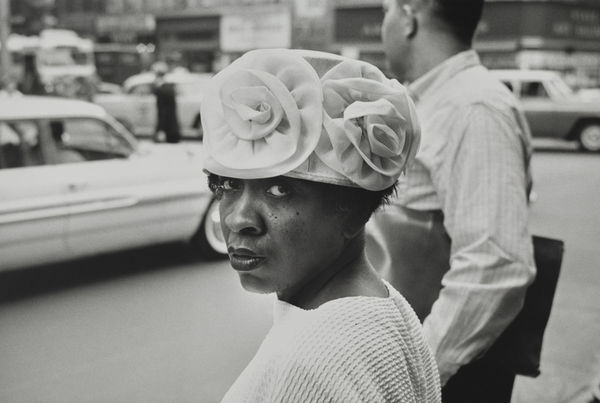








Vivian Maier tirelessly photographed the streets of Chicago and New York, but her talent remained anonymous throughout her life. A working nanny, she took advantage of every free moment to roam the streets, her Rolleiflex around her neck, taking a sharp look at the human in the city and leaving striking self-portraits. She never showed her photos to anyone and her recent discovery, a true American romance, reveals one of the most brilliant photographers of street photography.
In 2007, John Maloof discovered a lot in a Chicago auction house containing thousands of negatives, as well as undeveloped film and a few prints. His research led him to discover that this lot was only part of a corpus that he gathered by buying back the numerous boxes of negatives, films and documents. His internet searches were unsuccessful until 2009, when an obituary was published in the Chicago Tribune, indicating that Vivian Maier had died a few days earlier, at the age of 83.
Vivian Maier was born in 1926 in the Bronx to an Austro-Hungarian father and a French mother. She spent her childhood with her mother, between France and the United States. It seems that a friend of her mother, Jeanne Bertrand, a portrait photographer, introduced her to photography. Vivian Maier took her first pictures in France around 1949 with a Kodak Brownie, a simple camera intended for the amateur.
She returned to the United States in 1951. She became a nanny and worked for a family in Southampton, a suburb of New York. In 1952 she bought a Rolleiflex, a medium format camera commonly used by photographers of the time. Photography became an increasingly important part of her life. Leaving New York for Chicago in 1956, she joined the Gensburg family. There she raised their three children and used her bathroom to develop her films. This was the beginning of the most prolific period of Maier's work.
When she left the Gensburgs seventeen years later, Maier was no longer able to develop her films herself. Working from family to family, she took with her more and more undeveloped film and unprinted photographs. She photographed until the late 1990s, experimenting with color. These films will also remain undeveloped, as her financial troubles become significant. She then stored her negatives, films and documents in a warehouse. In the early 2000's, the Gensburg children took her in and housed her in a small studio. Her belongings were forgotten until 2007, when they were auctioned off for unpaid bills without her knowledge. Vivian Maier died in 2009 following a fall.
Part of her work was catalogued by John Maloof, who meticulously reconstructed a vast corpus of 143,000 negatives, plus film and audio documents. Her photographs are exhibited in many countries. The book Vivian Maier: Street Photographer was published in 2011, followed in 2013 by Vivian Maier: Self-portraits, and then Vivian Maier: The Color Work in 2018. The film "Finding Vivian Maier," directed by John Maloof and Charlie Siskel, was nominated for a Best Documentary Oscar in 2015.
-
Luxembourg Art Week 2026: zoom sur la photographie pour la 12e édition
PAPERJAM, 15 October 2026 -
C’est l’été !
9 Lives Magazine, 30 June 2026 -
Les Douches la Galerie : C’est l’été !
L'Œil de la photographie, 30 June 2026 -
Rue Vivian Maier
Télérama, 12 February 2026


-
Les meilleures expos gratuites à voir à Paris en février 2026 | Rue Vivian Maier
Télérama, 11 February 2026 -
Rue Vivian Maier
9 lives, 27 January 2026 -
Les Douches la Galerie : Vivian Maier : Rue Vivian Maier
L'Œil de la photographie, 27 January 2026 -
Rue Vivian Maier
Meer Art, 27 January 2026


-
Vivian Maier, Sabine Weiss - Made in USA
Télérama, 24 April 2024 -
Vivian Maier et Sabine Weiss : regards croisés sur les rues américaines à la Galerie les Douches
Phototrend, 17 April 2024 -
Les Douches la Galerie: Made in USA: Vivian Maier (1926- 2009) | Sabine Weiss (1924-2021)
L'Œil de la photographie, 17 April 2024 -
Des expositions de galeries parisiennes à voir en ce moment
Palace Scope, 1 April 2024


-
Made in USA : Vivian Maier & Sabine Weiss
9 Lives Magazine, 1 April 2024 -
Rues Américaines
Blind, 1 April 2024 -
Vivian Maier, Sabine Weiss | Regards croisés sur l'Amérique d'après-guerre
Julien Bolle, Réponses Photo, 1 April 2024 -
5 expositions gratuites à voir dans les galeries parisiennes cet automne
Floriane Reynaud, Vogue, 1 October 2021


-
6 expositions de photographie à découvrir dans les galeries parisiennes
Numéro, 19 February 2021 -
Photographie : Les autoportraits de Vivian Maier exposés à Les Douches la Galerie
Olivier Juszczak, 20 minutes, 18 February 2021 -
Les mystérieux autoportraits de Vivian Maier sont exposés à Paris
Donnia Ghezlane-Lala, Konbini, 16 February 2021 -
J'ai un ticket - Du 15 au 21 février 2021
Philippine Darblay, Paris Première, 14 February 2021




-
Sabine Weiss et Vivian Maier : promenades humanistes
Finley Cutts, Fisheye Magazine, 13 February 2021 -
Les mutiques visages de Vivian Maier à la Galerie Les Douches
Eliaz Ait Seddik, Toute la culture, 25 January 2021 -
3 expositions gratuites à voir à Paris en décembre
Rachel Thomas, Le Bonbon, 17 December 2020 -
Vivian Maier : génie de l’autoportrait
Alice Martinot-Lagarde, AD Magazine, 16 December 2020



-
Photo : 7 expositions à voir en galeries ce week-end
Alice Martinot-Lagarde, AD Magazine, 11 December 2020 -
Vivian Maier, Self-portraits
L'Œil de la Photographie, 16 November 2020 -
Grenoble : à la découverte de la photographe de rue Vivian Maier, au musée de l'Ancien Evêché
Sophie Marechal, France 3, 27 November 2019 -
L'art brut en contrepoint à la FIAC
AFP, Le Point, 17 October 2019




-
Qui sont ces artistes outsiders que l'on ne connaît pas et qui intéressent les acheteurs ?
Christine Siméone, France Inter, 17 October 2019 -
Outsider Art Fair: l'art brut dans tous ses états
Sophie de Santis, Le Figaro, 16 October 2019 -
5 questions à Becca Hoffman, directrice de l'Oustider Art Fair
Antoine Vitek, Culturez-vous, 7 October 2019 -
Maier multicolore
Sophie Bernard, Le Quotidien de l'Art, 20 March 2019




-
Vivian Maier, inconnue célèbre
Brigitte Hernandez, Le Point, 18 March 2019 -
Vivian Maier, The Color Work à Les Douches la Galerie
Rita Carvalho, Pariscope, 14 March 2019 -
Vivian Maier ou l'incertitude
Corinna Gepner, Délibéré, 10 March 2019 -
Vivian Maier, l'exposition envoûtante d'une grande photographe
Yasmine Youssi, Télérama, 8 March 2019




-
Cinq galeries et leurs expos à découvrir à Paris
Le Monde, 8 March 2019 -
Il lato kodachrome di Vivian Maier
Arte, 1 March 2019 -
Fascinante et mystérieuse Vivian Maier
Armelle Canitrot et Flavien Edenne, La Croix, 1 March 2019 -
2011 : Vivian Maier, la couleur du hasard
Mathilde Serrell, France Culture, 1 March 2019




-
L'Amérique des Trente Glorieuses vue par la photographe Vivian Maier
Yasmine Lahrichi, Numéro, 28 February 2019 -
14 exhibitions to see during Paris Fashion Week
Manon Garrigues, Jérôme Hanover, Vogue, 28 February 2019 -
Photo : quatre expos à Paris
Brigitte Hernandez, Le Point, 25 February 2019 -
Notre sélection d'expositions parisiennes
Bénédicte de Valicourt, Magcentre, 22 February 2019



-
Exposition Vivian Maier, le talent anonyme était aussi pionnier de la couleur
Pierre Rouanet, VDN, La Voix du Nord, 21 February 2019 -
Vivian Maier, nounou durant 40 ans, mais aussi formidable photographe
Jean-Marc Bodson, La Libre, 20 February 2019 -
Arts plastiques : Vivian Maier, "c?est la Mary Poppins de la photographie"
Arnaud Laporte, France Culture - La Dispute, 20 February 2019 -
Les ruelles de Vivian Maier
Maryse Emel, Non Fiction, 16 February 2019


-
Vivian Maier, une nounou devenue photographe exposée à Paris
Claire Chazal, Entrée Libre, 14 February 2019 -
Vivian Maier retente sa chance
Christine Coste, Le Journal des Arts, 13 February 2019 -
Vivian Maier: The Color Work
Tom Hastings, Studio International, 11 February 2019 -
Photo : les 10 expositions à ne surtout pas manquer en février à Paris
Frédérique Chapuis, Télérama Sortir, 7 February 2019




-
Vivian Maier, la «femme-mystère», à Paris
Sébastien Jédor, RFI, 7 February 2019 -
Vivian Maier, The Color Work
Sophie Bernard, La Gazette Drouot, 6 February 2019 -
Vivian Maier en pionnière de la couleur à la galerie Les Douches, à Paris
Valérie Oddos, Culture Box | France Info, 6 February 2019 -
Vivian Maier "The Color Work"
Eva Ben Saadi, Vià Grand Paris, 4 February 2019


-
La poésie de la rue en couleur par Vivian Maier
Phototrend, 4 February 2019 -
5 expositions gratuites à voir à Paris ce week-end
Claire Beghin, Vogue, 1 February 2019 -
Vivian Maier, en couleurs
Sophie de Santis, Figaroscope, 30 January 2019 -
Irrésistible fée Vivian
Natacha Nataf, Beaux-Arts Magazine, 29 January 2019


-
Vivian Maier passe à la couleur
Magali Jauffret, L'Humanité, 29 January 2019 -
L'oeil de Vivian Maier
Les Echos, 28 January 2019 -
Bienvenue aux bords
Jérémy Piette, Libération, 25 January 2019 -
Vivian Maier, la nounou géniale prend des couleurs
Yves Jaeglé, Le Parisien, 21 January 2019


-
Vivian Maier, entre ombres et couleurs
Maria Teresa Neira, Fisheye Magazine, 19 January 2019 -
Que faire le week-end du 18 au 20 janvier ?
Anne-Marie Kraus, Marie Claire, 18 January 2019 -
Vivian Maier, The Color Work à Les Douches La Galerie
Pariscope -
Vivian Maier : ses photos en couleur exposées à Paris
Glamour, 16 January 2019



-
Les rues de Chicago dans l'oeil de Vivian Maier
M, le magazine du Monde, 11 January 2019 -
Vivian Maier, la couleur du mystère
Claire Guillot, Le Monde, 11 January 2019 -
Black Chicago
Frédérique Chapuis, Télérama Sortir, 30 November 2017 -
Vivian Maier (1926-2009) Une photographe révélée
Véronique Chemla, 23 November 2017



-
The Life and After Life of Vivian Maier
Pamela Bannos, The Paris Review, 20 November 2017 -
Black Chicago, des années 40 à nos jours
Raphaèle Santa Maria, Cultur'Easy, 20 November 2017 -
À Paris Photo il n'y a plus de frontière entre documentaire et art
Magali Jauffret, L'Humanité, 11 November 2017 -
Paris Photo: coup d'oeil dans les galeries
Valérie Duponchelle, Agathe Moreaux et Isabelle Stassart, Le Figaroscope, 8 November 2017


-
Black Chicago : chronicle of African-American life in the city - in pictures
The Guardian, 1 November 2017 -
Vivian Maier, Through a clearer lens
Parul Sehgal, New York Times, 31 October 2017 -
Ne ratez pas : "A la recherche de Vivian Maier"
Sophie Grassin, Le Nouvel Obs, 26 April 2017 -
La double vie de Vivian Maier
Armelle Canitrot, La Croix


-
Clandestine à Chicago
Hubert Prolongeau, Muze -
Vivian Maier, portrait d'une immense photographe
Jeanne, Addict Culture, 5 April 2017 -
Photography: Vivian Maier at Fototeca Latinamericana
Buenos Aires Herald, 20 March 2017 -
Beautiful and Artistic self-portraits by Vivian Maier
Fubiz, 12 March 2017




-
Phtography's Best-Kept Secret: The allure of Vivian Maier
Sonia Redmond Zhao, Culture Trip, 5 January 2017 -
Vivian Maier, la mystérieuse côté couleur
Renaud Marot, Réponse Photo, 29 November 2016 -
Deux grandes photographes libres
Evelyne Eveno, BIBA, 24 November 2016 -
Les chroniques américaines de Vivian Maier
Sophie Bernard, L'Oeil de la photographie, 18 November 2016


-
Berenice Abbott - Vivian Maier : Une fantastique passion
Anna Maréchal, Time Out, 14 November 2016 -
Vivian Maier, Chroniques am?ricaines à l'isle-sur-la-sorgue
Chirine Hammouch, Connaissance des Arts, 12 November 2016 -
Abbott et Maier à la Galerie Les Douches: la photographie américaine sans fioritures
Thierry Hay, France Tv info, 9 November 2016 -
Vivian Maier raconte l'Amérique
Fisheye, 2 November 2016


-
Berenice Abbott et Vivian Maier
Thomas Lapointe, Pop and Up, 1 November 2016 -
Chroniques américaines de Vivian Maier
Nadia Trujillo, Le monde de la photo, 29 October 2016 -
Vivian Maier, In Her Own Hands
Anne Morin, L'Oeil de la photographie, 22 September 2016 -
Ne ratez pas : "A la recherche de Vivian Maier"
Sophie Grassin, Télé Obs, 17 August 2016


-
Exposition Vivian Maier : Une grande photographe de rue
Sh Barcelona, 13 July 2016 -
Zoom Photographe: Vivian Maier
Mathilde Sigalas, Phototrend, 23 June 2016 -
L'immense secret de la nounou photographe Vivian Maier
Mr Mondialisation, 26 May 2016 -
Portrait of an artiste dying intestate
James Adams, The globe and mail, 24 January 2016




-
La photographe inconnue
Les inrockuptibles, 26 August 2015 -
Paris: New York Group Show à la galerie les Douches
L'Oeil de la photographie, 25 March 2015 -
Expo : la ville de New York à travers le regard de photographes célèbres
Sophie Bouchet, Glamour.com, 24 March 2015 -
Meet the mysterious streete photographer who will never know her own fame
Katherine Brooks, Hufftington Post, 14 November 2014


-
Vivian Maier: mysterious and eccentric nnny who took stunning photographs
Mark Brown, The Guardian, 14 July 2014 -
La photographe Vivian Maier, entre mystère et surexposition
Frédéric Strauss, Télérama, 2 July 2014 -
La nounou était une photographe de génie
Hubert Lizé, Le Parisien, 2 July 2014 -
"A la recherche de Vivian Maier"
Marine Le Breton, Le Huffington Post, 2 July 2014



-
" A la recherche de Vivian Maier " : sur les traces d'un personnage de roman d'espionnage
Sandrine Marques, Le Monde, 1 July 2014 -
Ci-gît Vivian Maier, photographe enterrée dans ses cartons
Valérie Duponchelle, Le Figaro, 1 July 2014 -
Loin des clichés
V.O Magazine, 1 July 2014 -
Vivian Maier à son révélateur
Brigitte Ollier, Libération, 1 July 2014



-
La Mary Poppins au Rolleiflex
Cathy Rmy, Le Monde, 12 December 2013 -
Vivian Maier : le mystère de la chambre noire
Sylvie Kerviel, Le Monde, 7 December 2013 -
Cette étrange mademoiselle Maier
Jean-Claude Renard, Politis, 5 December 2013 -
Vivian Maier, chef d'oeuvre inconnu
Daphné Thiery, Le Figaro, 4 October 2013


-
Vivian Maier - L'incroyable histoire d'une photographe amateur
Caroline Benichou, Réponses Photo, 1 October 2013 -
La BBC sur les terres de Vivian Maier
Marie-France Batard, Le Dauphiné Libéré, 3 March 2013 -
63 ans après, des Haut-Alpins découvrent qu'ils sont liés à l'histoire de la photo
Nicolas Manirgat, Le Dauphiné Libéré, 1 April 2012 -
Vivivan Maier: 'Photographs from the Maloof collection'
Roberta Smith, The New York Times, 19 January 2012





-
C'est l'été !
Exposition collective 1 - 31 July 2026Summer occupies a singular place in the history of photography. A season of travel, leisure, and abundant light, it has profoundly shaped the production and circulation of photographic images since...Read more -
Jeux de mots
Exposition collective 13 March - 16 May 2026Following Dans ma cuisine , last year’s group exhibition devoted to domestic space and the modest arrangement of everyday objects as seen through the lens of 20th-century photog-raphers, this new...Read more -
Rue Vivian Maier
Centenaire de sa naissance 29 January - 28 February 2026Following the 2022 retrospective at the Musée du Luxembourg, Vivian Maier returns to Paris at the initiative of Les Douches la Galerie, which has been defending her work for more...Read more -
Made in USA
Vivian Maier (1926-2009) | Sabine Weiss (1924-2021) 11 April - 25 May 2024One of them, Sabine Weiss, was born in 1924. The other one, Vivian Maier, was born in 1926. Both chose the street as their field of action and had a...Read more


-
Vivian Maier, Grasping the Unexpected
5 November 2021 - 12 February 2022Alongside the Vivian Maier retrospective at the Musée du Luxembourg, Les Douches la Galerie presents a new solo show from November 17, 2021 to February 5, 2022. Mostly unreleased, in...Read more -
Vivian Maier, Self portraits
28 November 2020 - 27 February 2021Les Douches la Galerie is pleased to present a new selection of self-portraits by Vivian Maier. Produced between 1953 and the 1970s, they once again demonstrate her eye for reflections,...Read more -
Staff picks
Group show 20 June - 27 July 2019This summer, from 20 June through 27 July, Les Douches la Galerie is pleased to present a selection of our favourite works by Berenice Abbott , Tom Arndt , John...Read more -
Vivian Maier, The Color Work
19 January - 30 March 2019Les Douches la Galerie is pleased to present a new exhibition, dedicated to Vivian Maier's color work.Read more


-
Christmas selection
Group show 1 - 22 December 2018Our Christmas selection will be on view at the Gallery from November 23 through December 22, 2018. An eclectic selection of images including works by Harry Callahan, Ernst Haas, Stéphane...Read more -
Black Chicago
Group show 28 October 2017 - 13 January 2018The seven photographers who are the subject of this exhibit – Wayne Miller, Ray K. Metzker, Yasuhiro Ishimoto, Marvin E. Newman, Vivian Maier, Tom Arndt and Carlos Javier Ortiz –...Read more -
Berenice Abbott, Vivian Maier : Une fantastique passion
8 October - 26 November 2016What is the connection between these two utterly different women? Berenice Abbott sought out the light, while Vivian Maier hid amongst the shadows. One indefatigably knocked on every door in...Read more -
Chicago Eyes
Group show 16 October - 27 November 2015This exhibit is part of CHICAGO À PARIS , organized by the Théâtre de la Ville, with the support of The Cultural Services of the French Embassy in the United...Read more


-
New York
Group show 20 March - 13 June 2015We are pleased to announce New York , a group show including Berenice Abbott, Tom Arndt, Arlene Gottfried, Ernst Haas, Helen Levitt, Vivian Maier, Ray Metzker, Louis Stettner, and Sabine...Read more -
Self-portraits
Group show 6 November 2014 - 10 January 2015The Self-Portrait When a photographer shoots him/herself, s/he upsets a code of conduct, and the “shoot” morphs into a real challenge. This show of around 40 modern and contemporary prints...Read more -
Vivian Maier
15 October - 21 December 2013We are proud to present the first Vivian Maier solo show in Paris. Unknown in her lifetime, she leaves an outstanding body of work composed of more than 100,000 negatives...Read more


-
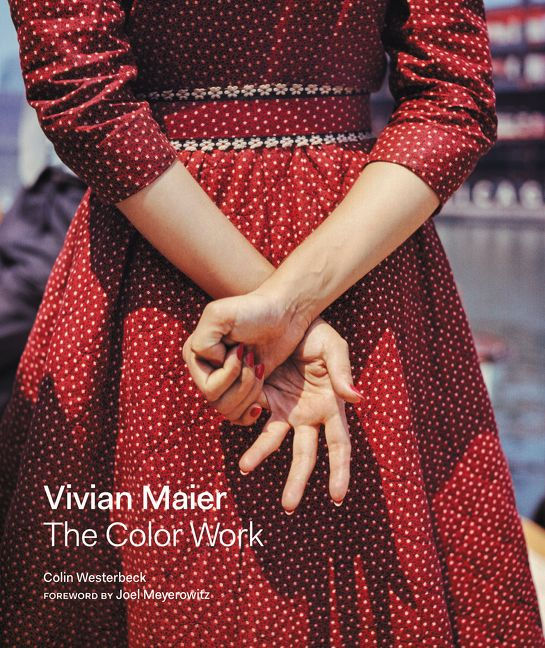
Vivian Maier | The Color Work
Joel Meyerowitz, Colin Westerbeck, 2018CatalogueRead more
Publisher: Harper Design
ISBN: 978-0-06-279557-1 -

Vivian Maier | Self-Portraits
John Maloof, 2013CatalogueRead more
Publisher: PowerHouse Books
ISBN: 978-1576876626 -
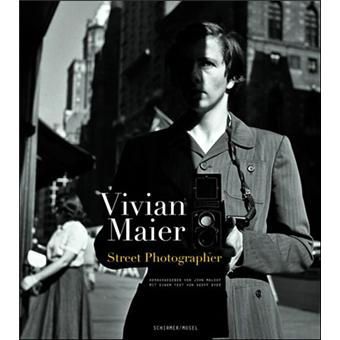
Vivian Maier | Street Photographer
John Maloof, 2011CatalogueRead more
Publisher: PowerHouse Books
ISBN: 978-1576875773
-
Vivian Maier : Unseen Work
Fotografiska New York, États-Unis 31 mai - 29 septembre 2024 Read more -
Portraits, La collection Florence et Damien Bachelot
Musée Réattu, Arles 1 juillet - 1 octobre 2023 Read more -
La collection de Florence et Damien Bachelot
Villa Médicis, Rome October 7, 2022 - February 26, 2023The Villa Médicis is hosting the exhibition 'Collection' by Florence and Damien Bachelot. Ray K Metzker, Sabine Weiss, Vivian Maier and Stéphane Couturier are part...Read more -
Vivian Maier at the Musée du Luxembourg
From September 15, 2021 to January 16, 2022 31 May 2021Vivian Maier exposition Musée du Luxembourg 2021Read more -
Vivian Maier: The Self-portrait and its Double
Actualités des artistes 17 January 2020The Finnish Museum of PhotographyRead more -
Vivian Maier. Street photographer
Actualités des artistes 9 November 2019Musée de l'Ancien Evêché, GrenobleRead more -
Vivian Maier at Photo London
Actualités des artistes 16 May 2019Panel discussion: Anna Sparham and Ann Marks on May 17th at 1pm Somerset House Strand, LondonRead more -
Vivian Maier: The Color Work
Actualités des artistes 14 November 2018Howard Greenberg Gallery, New YorkRead more -
L'autoportrait et son double
Actualités des artistes 4 October 2018Centro Cultural Las Condes, Santiago de ChileRead more -
Vivian Maier: Street Photographer
Actualités des artistes 16 June 2018Art Gallery of Hamilton, HamiltonRead more -
Photography's Lost Voice
Actualités des artistes 10 February 2018International Photography Hall of Fame and Museum, St LouisRead more -
The Secret Passion
Actualités des artistes 5 October 2017The Mai Mano HouseRead more -
A photographer found
Actualités des artistes 23 June 2017Loggia Degli AbatiRead more -
Vivian Maier (1926-2009): The Street Photographer
Actualités des artistes 1 March 2017FoLa Fototeca Latinoamericana, Buenos AiresRead more -
Chicago Eyes with Henri Peretz
Conférence 18 October 2015Pourquoi et comment Chicago est devenue au début du vingtième siècle, la ville de l?avant-garde dans des domaines aussi différents que le jazz, la photographie,...Read more -
Talk with Michaël Houlette
Conférence 27 November 2014Michaël Houlette, a former curator at the Jeu de Paume, who worked on the Vivian Maier show from last year, is now the director of...Read more -
Rencontres photographiques du 10e
From November 4 to December 1, 2021 November 4 - December 1, 2021Les Douches la Galerie a le plaisir de participer à la nouvelle édition des Rencontres Photographiques du 10e , organisée par le Collectif Fetart et...Read more


-

Luxembourg Art Week 2026
20 - 22 November 2026À l’occasion de sa première participation à Luxembourg Art Week, Les Douches la Galerie réunit cinq grandes figures de la photographie : Albarrán Cabrera, Stéphane...Read more -

Paris Photo 2026
12 - 15 November 2026À l’occasion du bicentenaire de la photographie, Les Douches la Galerie fait dialoguer oeuvres iconiques et expérimentations contemporaines. Cet accrochage traverse l’histoire du médium, entre...Read more -

Paris Photo 2025
12 - 15 November 2025Pour sa onzième participation consécutive à Paris Photo, Les Douches la Galerie, qui vient tout juste d’emménager au 54, rue Chaponn dans le Marais, investit...Read more -

Paris Photo 2024
7 - 10 November 2024Read more -

Art Cologne 2023
16 - 19 November 2023Read more -

Paris Photo 2022
10 - 13 November 2022Read more -

Paris Photo 2021
11 - 14 November 2021Read more -

Outsider Art Fair 2019
17 - 20 October 2019Read more -

Photofairs | Shanghai 2019
20 - 22 September 2019In support of documentary photography, we are introducing artists whose work reflects the Galerie’s artistic ambitions. Ernst Haas is acclaimed as one of the most...Read more